Archive for January, 2010


AvatarHaving previously been put off 3D by 80’s TV and magazines like Look In, (not to mention the £11 per ticket price tag) I was dubious about going to see this film expecting the good old red and green cardboard glasses. Instead the new version looks like NHS sunglasses with slightly darkened lenses (no sign of the colours of the past) and a proper plastic frame.

So preparing to be unimpressed I donned the glasses at the required time and the Disney Logo on the trailer that had just started, jumped out of the screen and hovered a foot from my nose!!! Not a bad start. We then got treated to the usual cliches of things jumping out of the screen towards you etc. which is all well and good, but tends to distract from a storyline.

Once the actual film starts, however, you notice that the 3D effects aren’t pushed, the story takes first place and the technology just adds that extra depth and clarity to the scenes, possibly the epitomy of this style is after the destruction of the Hometree, where the ash is falling all around you as well as the hero on screen.

Anyway, to the film…

Jake Sully (Sam Worthington), a disabled ex-marine is persuaded to take on his twin brother’s position on a moon called Pandora, rich in a coveted mineral and inhabited by a tall blue-skinned Na’vi, a “primitive” race. Jake’s job to control an Avatar, a genetically engineered simulation of one of the Na’vi in order to infiltrate the tribe and convince them to move from the mineral rich lands.

I assume that the writers analogy was that of the treatment of the Native Americans, but fresh from my escapades in Oz, I couldn’t fail to miss the similarities of the Na’vi’s belief system with that of the Aboriginies (somewhat helped by the fact that my guide, Evan Yanna Muru, had seen the film the day before my walkabout), being at one with the world around them enhanced in the Na’vi’s case by their ability to physically bond with the plants and animals.

Generally accepted that all they have to do is look like the Na’vi and educate them, it isn’t until Jake is separated from the others and meets up with Neytiri (Zoe Saldana) that he discovers the rich tapestry of beliefs from his reluctant tutor. In learning these beliefs Jake comes to appreciate and bond with this primitive way of life.

Inevitably of course, the “advanced” human race decides that enough-is-enough and moves in to capture the mineral wealth by force, destroying the Hometree (which just happens to be on top of the biggest lode of Unobtanium) and dispersing the natives.

What follows is the usual hero changes sides and leads the tribe against the agressors (along with boy meets girl, boy loses girl, boy wins girl back by flying a huge reptile), which on the face of it is a pretty cliched storyline, but it is the well thought out background to the film (along with the careful use of 3D) that sets it apart from others. If you want an action movie, then it’s not bad, but if you miss out on the spirituality of the storyline then you’re only seeing half the film.

When, due to the cold snap, disabled pensioner Joan Armstrong (81) found herself housebound, she called on Salford social services for help. She wasn’t looking for much, just someone to do a little shopping for her while she was unable to do it herself.

The answer she got is that she would have to wait two weeks for an assessment before they could do anything for her!!!

The fact that she didn’t know her neighbours well enough to ask any of them for help (and none of her neighbours thought to check up on her) is one problem, what we can do to get the community spirit back into our national psyche god only knows.

What is really alarming though is that the jobsworth at the other end of the phone, despite working in a caring profession, lacked the basic humanity to make the effort to get something done!

I’m sure that the people who actually do the caring (not holed up in a centrally heated office) wouldn’t have minded checking up on this vulnerable pensioner and could have easily done a quick assessment to show that she really did need a spot of help in these unusual conditions.

This “person” needs to be sacked, but more than that needs to be named, shamed and vilified, abandoning Joan in this way was attempted manslaughter.

Many pensioners faced with this callousnes would just have given up and likely become another victim of the cold, luckily in this case the Manchester Evening News became involved.

Sunrise at Heathrow

Sunrise at Heathrow

Arrived back in England early yesterday morning expecting the whole world to have frozen solid. Had a bit of a problem starting the car after a month stood idle (the car that is) and a couple of weeks of cold weather but apart from that and a minor delay at Heathrow no issues getting around.

I was also expecting to be freezing my wotnots off, but only got round to putting a fleece on when I went to shovel the snow drift from the doors of my garage.

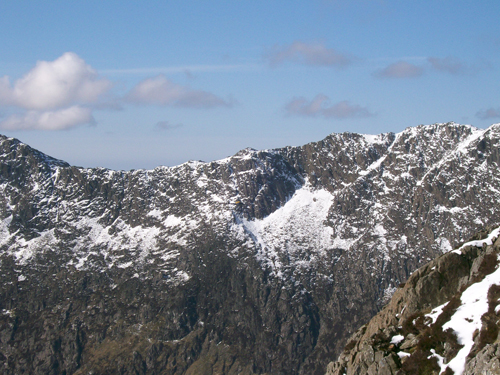
Flying up from Heathrow was to see the countryside at it’s best, the snow having cleaned the landscape to it’s bare essentials, the Pennines especially had almost Lake District grandeur instead of the usual view of bumpy muddy-green moorland we’re used to.

Sat at Sydney Airport’s business club lounge, drink in one hand, wireless internet in the other, an hour and a half to go before we’re in the air.

God knows what we’re going to be greated with when we get back, last news I had was that Manchester Airport had reopened, but big problems on the road with Rochdale Council due to run out of grit before we get back (not that they do any but the main roads anymore so my estate will be treacherous.)

Also got to hope that the car will start after a month sat in the dismal British weather. (Granted we had thunderstorms last night, when we got here there were warnings of fire risks, now parts of NSW are flooded)

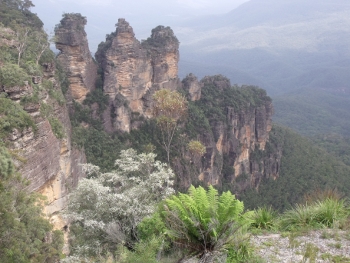
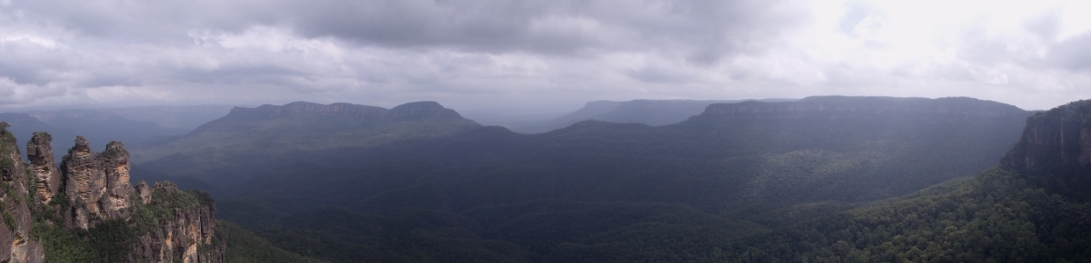
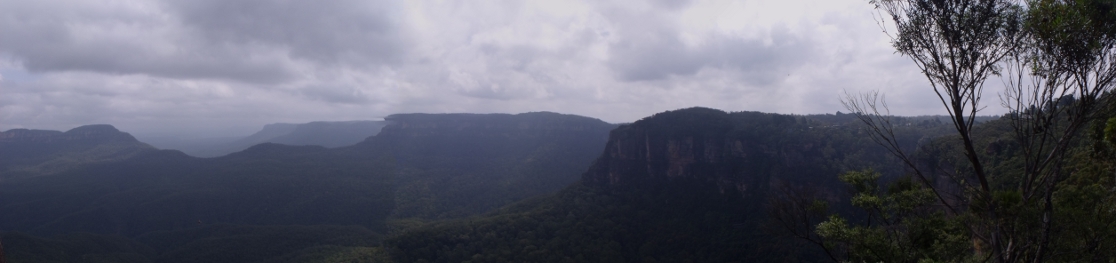
Nothing to say, these three views say it all

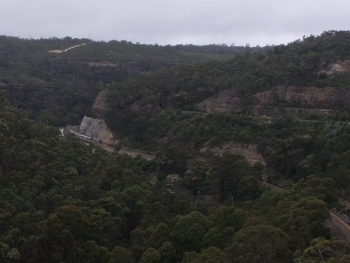
Built in the 1860s to connect the eastern plains to the capital of NSW (Sydney), the topography of the area required a series of “zig-zag” descents to allow the trains of the day to navigate the descent from the Blue Mountains to Lithgow.

Built using the technology of the day (a couple of Irish navies and a wheelbarrow) the construction included four large rock cuttings, three fine stone viaducts with 30-foot semi-circular arches  and a short tunnel. In the descent of the middle road, the line dropped 101 feet between the reversing points, being part of the 550 foot descent from Clarence. The whole route had a ruling grade of 1:42.

By 1910, with more advanced technology and growing traffic on the line, a new route through the mountains using ten tunnels was constructed (which still follows the bottom line of the zig-zag), with no ceremony the old line was decomissioned and the new one put into use.

The line was restored as a heritage railway in 1975.

Unfortunatly due to a locomotive failure the steam loco wasn’t available so we had to make do with diesel.

If you’re in Sydney on a Sunday it’s worth adopting some children for the day as travelling with them entitles you to day ticket that covers you for busses, ferries and trains in the area for A$2.5 each! (The usual adult return fare to Manly being A$27.60)

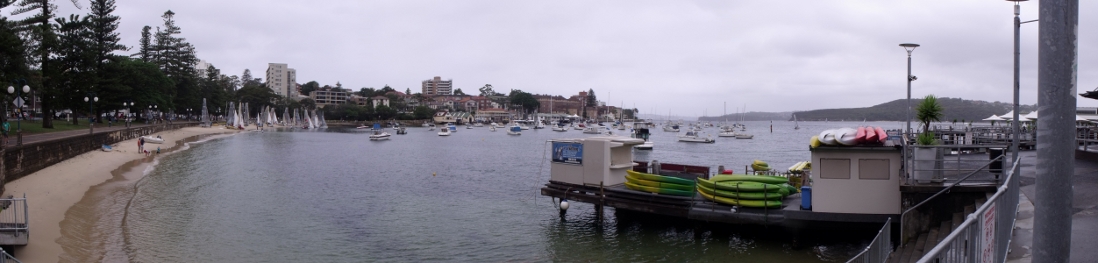
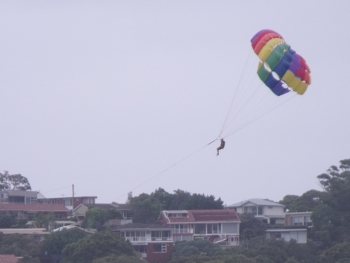
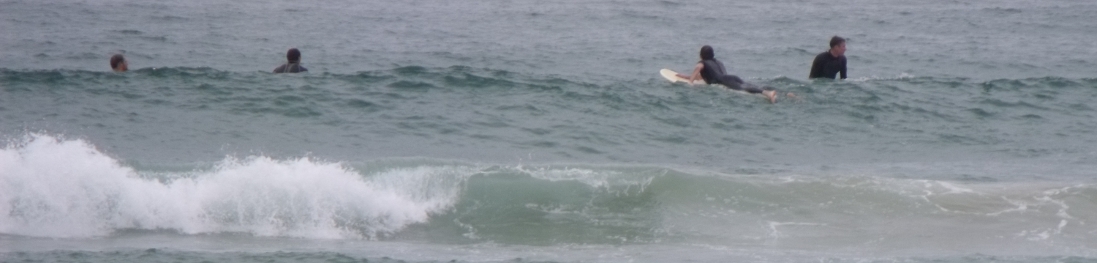
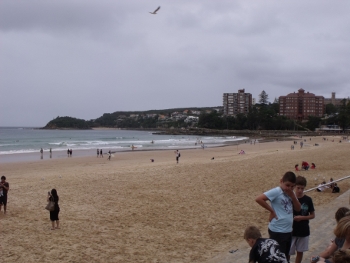
For Christmas we’d bought Sheldon a voucher to try parasailing with a company based at Manly at the entrance to Sydney Harbour, so the six of us set off on train and ferry to let him try it out.

First day of the new-year and I went out on a guided walk through the bush with http://www.bluemountainswalkabout.com

The original Aboriginal clan from this area was rapidly wiped out with the arrival of European settlers and the smallpox that arrived with them, but our guide Evan Yanna Muru has worked as an Aboriginal Discovery Ranger, going out into the bush searching for ancient sites and the song-lines that connect them.

The walkabout is a right of passage to the Aboriginal people, a rebirth from one part of your life to the next where the initiates would be taught the stories that impart the rules and traditions of the clan, so the start of the new-year seemed a very appropriate time to take this journey.

We left Faulconbridge railway station at 10:45 and a few minutes later stepped off the path and into the bush. With a guide it was very easy to see the trail we were following, but on your own I doubt that you would be able to find the route for yourself or recognise it as anything other than an animal run.

The start of our journey came with our first taste of bush tucker, a sweet violet berry growing by the side of the trail.

As we went along Evan pointed out plant and their uses, a tree with black bark that can be used to cover wounds, the bark having anti-septic properties, and the gum from another tree that would be used to stick the bark to your skin – the gum itself having anti-septic and pain relieving properties.

With the Aboriginal lifestyle, it was important (and reinforced with their rituals) to leave all negetivity behind and be at one with the land, to feel the energies of the rainbow serpent all around and within yourself, to listen to those energies and let them guide you. There were some harsh punishments for those rare clan members who couldn’t release themselves from negitivity.

Being at one with the land was the theme of the first spiritual site we visited, an ancient rock carving depicting a wallaby who ignores this message and concentrates on something in the bush, with her awareness focused, she doesn’t see that the rainbow serpent has stalked her young  joey and taken it away.

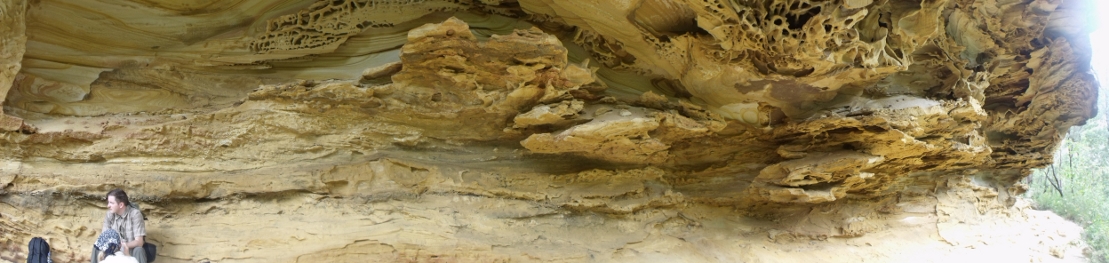
 Our second stop was an amazing sandstone cave, where the bones of the earth, surreal natural rock formations, were exposed. At thes stop Evan showed us some of the leaves that could be crushed, roled and placed up each nostril to allow the menthol vapours to clear your breathing, and also the tea tree leaves the oil of which has a huge variety of uses.

The walk so far had been accompanied by the shrill calls of cicadas, especially noisy this year, in ancient times this increase of numbers and the food source it provided would have prompted a great corroboree, a large meeting uniting various clans to exchange songs, perform ritual dances, have ceremonial battles, arrange marriages and suchlike.

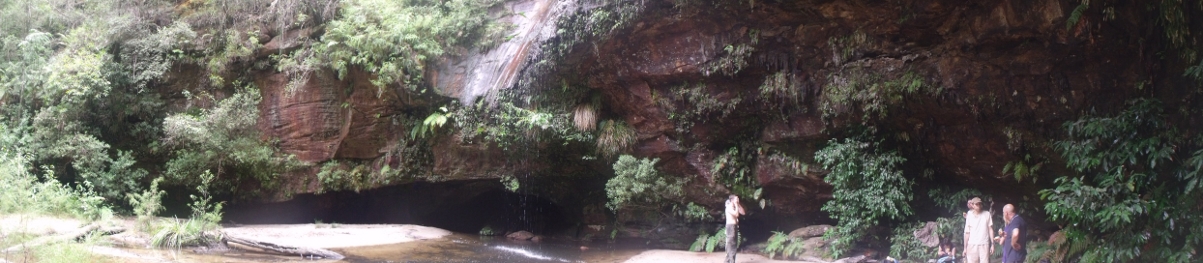
 As we descended into the rainforest, we left this cacophony behind and after a long challenging section arrive at our spot for lunch, a sheltered billabong under a waterfall. Evan explained to us the sybolism used in Aboriginal art and how to grind ocres to make paints for traditional art, giving us chance to experiment on park and leaves that we had collected on our journey.

After lunch we started the more strenuous ascent out of the valley we had come down in the morning. As we re-entered the realm of the cicadas, we came to the final site of the tour a rock cave featuring handprints from ancient Aboriginies including one from a “clever man” (spiritual doctor) recognisable as it also shows his arm. Whereas women would complete 5 rituals during their lives and men 10, the cever men would complete 15 walkabouts, some taking over a year and covering great distances, their apprenticeship could take up to 30 years.